
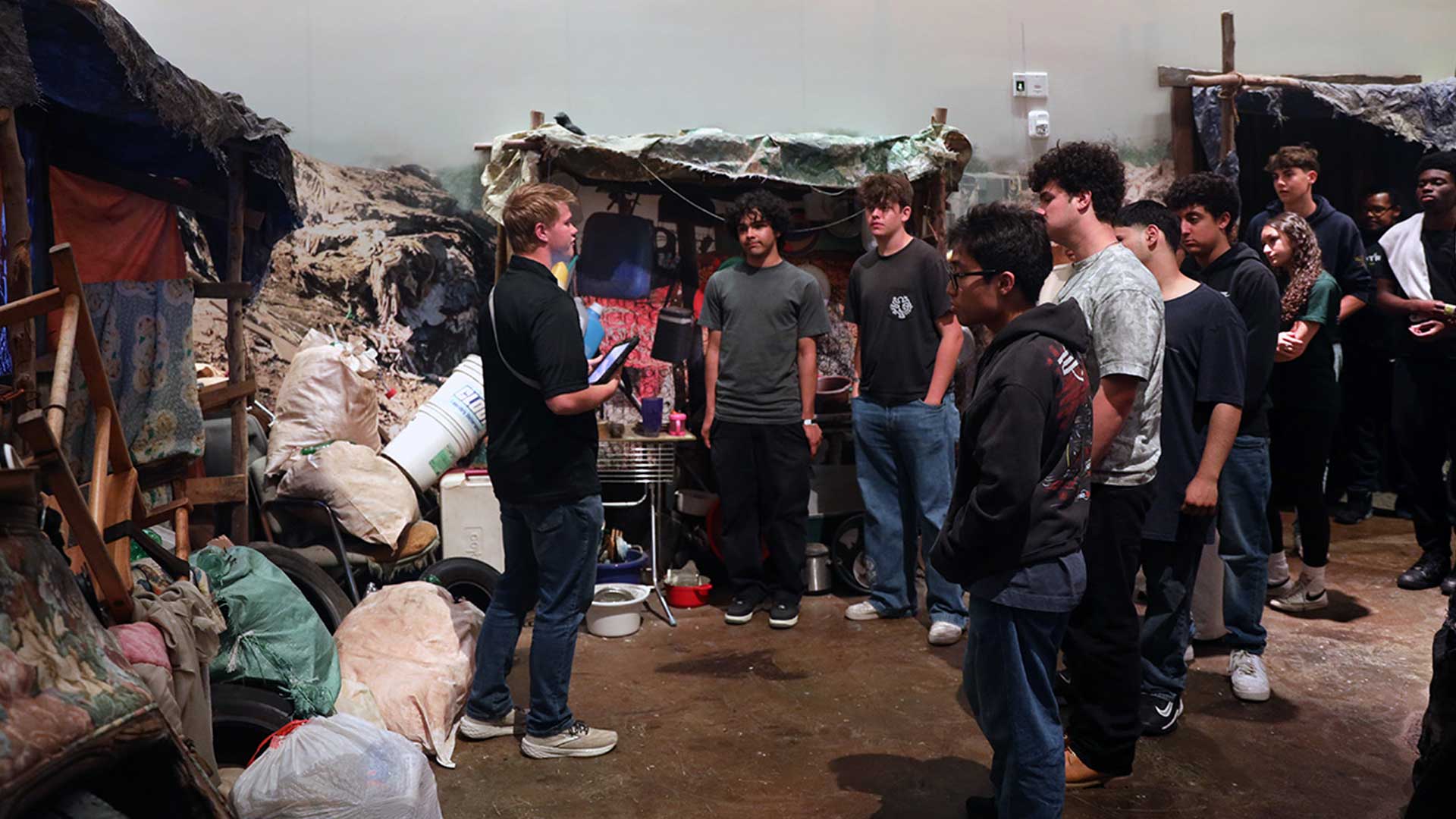
Learning about poverty is one thing. Encountering it in a way that calls you to respond is another. The Poverty Encounter experience is designed to do more than inform—it invites students to connect faith to action and see themselves as part of the solution.
For one school leader, these moments of reflection and re-engagement have become familiar, and they’re the reason Poverty Encounter remains a core part of his students’ formation.
Medene Presley, the Director of Christian Service and Immersion at Notre Dame High School, has brought students to Poverty Encounter every year since 2021 as part of a broader immersion program. With more than 100 contacts across LA County, Medene organizes a three-day retreat to broaden students’ awareness of the world and deepen their understanding of social responsibility.
What Makes Poverty Encounter Different
Among the many service-based experiences available to his students, Poverty Encounter remains a consistent part of the program for a specific reason. For Medene, it provides students with something they need before they ever step into hands-on service: context.
Poverty Encounter focuses on storytelling, an approach Medene links to narrative theology, in which stories help shape understanding long before solutions are discussed. Rather than starting with action, the experience invites students to listen, observe, and consider the realities facing children around the world.
Poverty Encounter does a good job with storytelling… so before the students are able to go and do the service, I like for them to hear the stories.
That emphasis on storytelling and a global perspective is another reason the experience stands out. While much of the students’ service work addresses local needs, Poverty Encounter broadens their view, particularly regarding the impact of poverty on children worldwide. “Poverty Encounter will expand your consciousness on the plight of young human beings all over the world,” Medene says, noting that the experience doesn’t stop at awareness but points toward response. “It also calls you to action in how you want to respond to it.”
How the Students Respond During the Experience
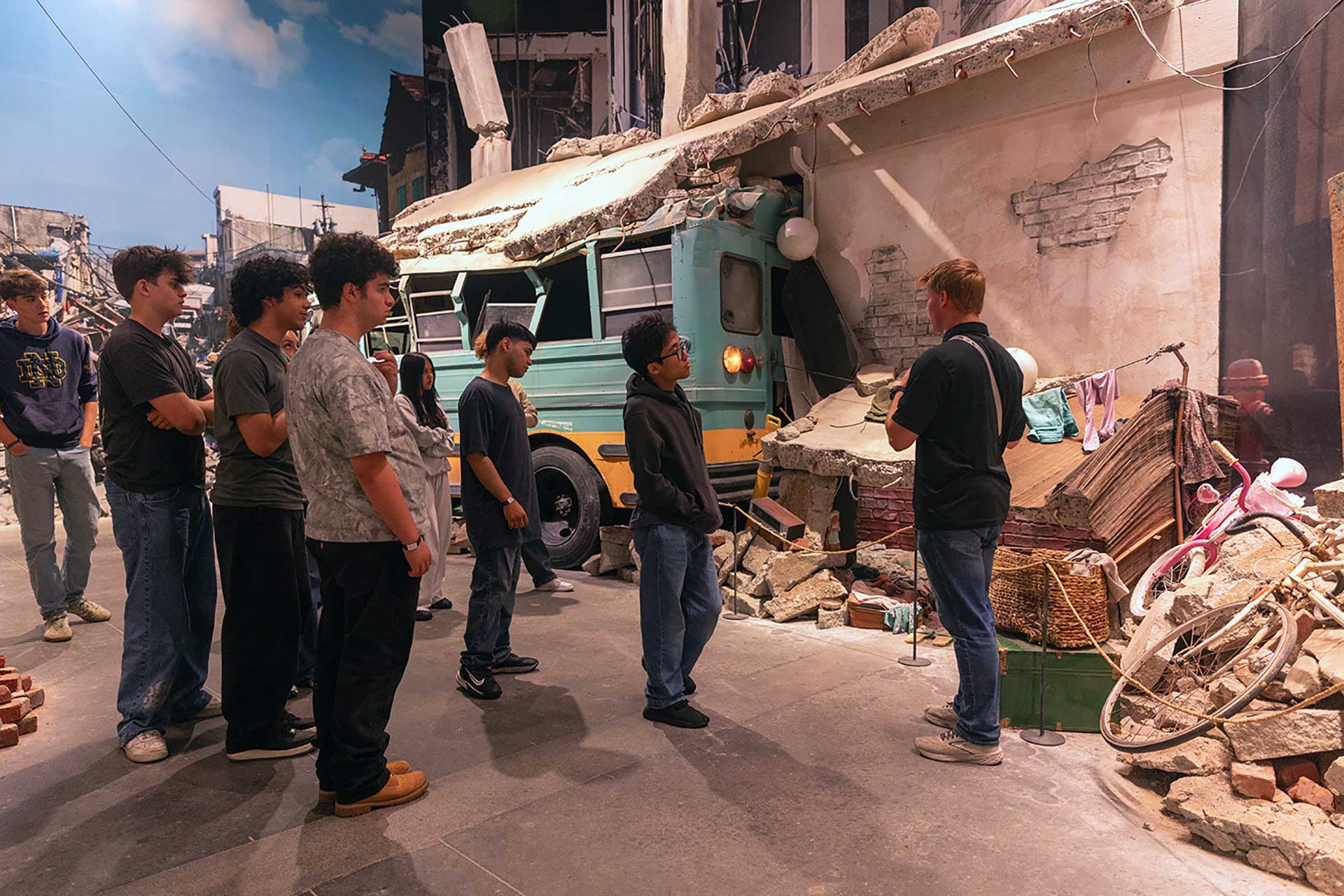
Because the students experience Poverty Encounter as part of a three-day retreat, they usually arrive tired, but they don’t stay that way. The different rooms invite emotional and physical engagement. They aren’t just listening; they are seeing, hearing, and touching as they go.
“Walking through all of those different stations wakes them up,” Medene shares. As they engage with the stories, he hears them begin to reflect on their own social location, recognizing how much they’ve been given and wrestling with what that means in light of what they’re encountering. Over time, those reflections turn outward, shifting toward questions of response and how they might help.
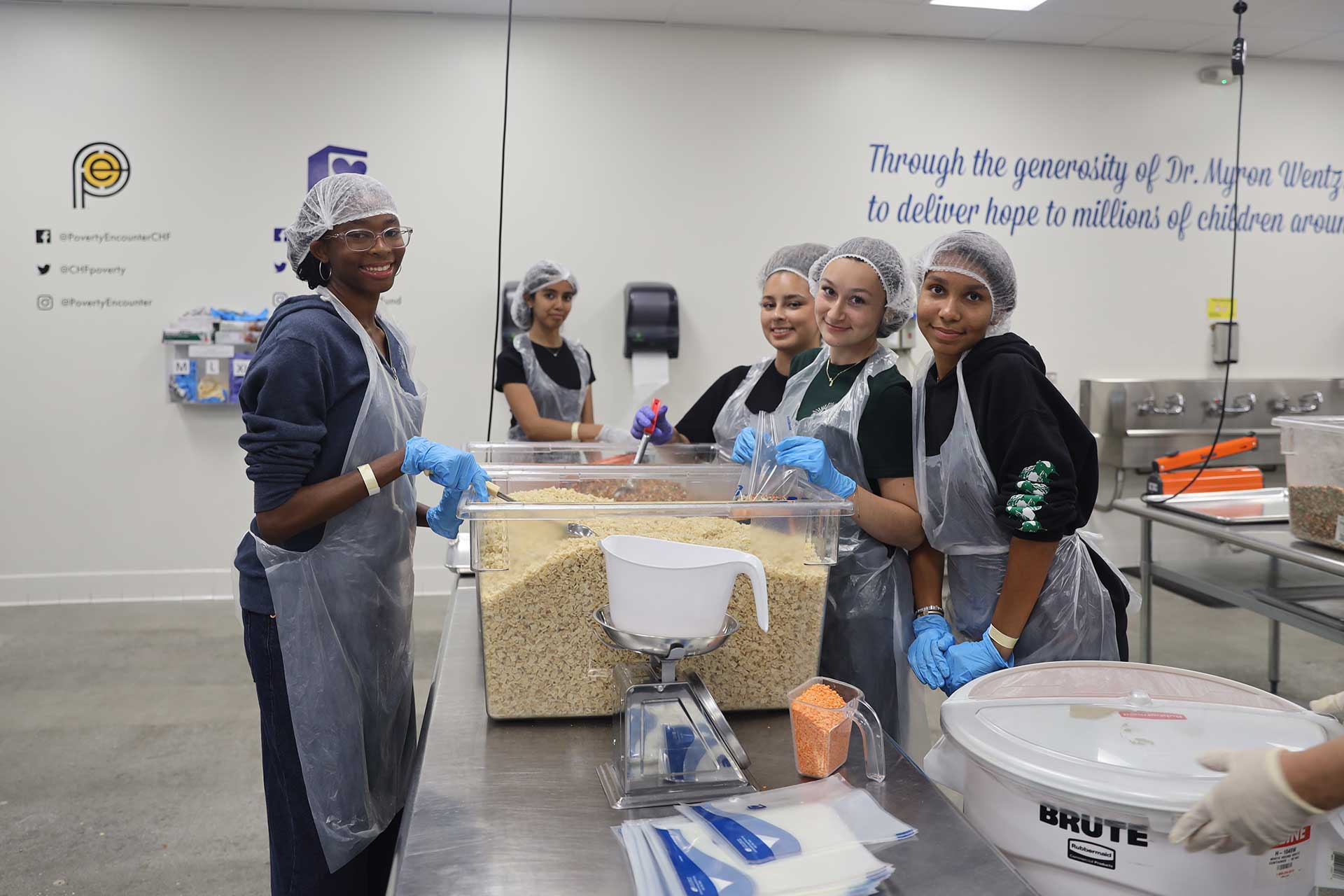
By the time students reach the service portion of the experience, that internal processing becomes tangible. There is noticeable excitement as they work together to pack items for children in need. Regardless of how tired they were when they arrived, they leave reenergized. They carry more than just new information; they carry questions and convictions that stay with them beyond the experience.
Measuring the Impact
For Medene, the true impact of Poverty Encounter becomes clear after students leave the building. Weeks and even months after the retreat, he sees them continue to engage, asking for opportunities to get involved and referencing Poverty Encounter in later service reflections and conversations. Some students have returned to volunteer at Children’s Hunger Fund with their families or church groups. He even hears from pastors interested in bringing their own congregations after students share their experiences.
“Re-engagement is what I like to see once they have those experiences,” Medene says. Long after the retreat ends, students return with questions. They want to know more about the places they encountered, how they can help, and where they fit in the work they’ve seen.
That re-engagement is more than enthusiasm. It reflects something deeper. Medene notices a change in the language students use when discussing poverty. They discuss concepts like poverty cycles, ideas they didn’t have words for before. These concepts aren’t limited to written reflections but also appear in classroom conversations and everyday discussions.
Equally important, he sees a shift in how students connect faith to action. Many initially recognize how blessed they are, but rather than stopping at gratitude, the experience pushes them toward responsibility, asking how belief translates into justice, service, and involvement through the local church. Medene explains that Poverty Encounter helps students see that “it’s not enough to believe—you’ve got to do.”
It’s not enough to believe—you’ve got to do.
This is what Medene continues to see in his students. Small seeds that reflect a growing understanding of their role in the world and their capacity to respond and make a difference.
Why Starting Younger Matters
As Medene reflects on the impact Poverty Encounter has had on students, one conviction has grown clearer over time: these experiences shouldn’t wait until later adolescence.
“I actually think they should experience it earlier,” he says. The students he brings are already forming their views of the world.
Our minds are malleable when we’re younger… We’re planting seeds constantly, and it’s better to plant them even younger, so that they could have grown so much more by the time they’re sixteen or seventeen years old.
For Medene, Poverty Encounter functions less as a one-time lesson and more as an early catalyst. It introduces ideas, concepts, and questions that can continue to develop as children mature. Exposure at a young age helps shape how young people understand poverty, responsibility, and their role in the world long before those perspectives are fixed.
This is why he continues to advocate for making experiences like Poverty Encounter more widely accessible to younger audiences. When seeds of empathy, faith, and action are planted early, they have more room to take root, shaping not only what students know but also how they live as they grow.
Carrying It Forward
When asked what he hopes his students take with them long after they leave Poverty Encounter, Medene’s answer is simple and direct.
“Number one: Jesus,” he says. Everything else flows from that foundation. “The love ethics of Christ matter most because if you get that right, you’ll do everything else right.”
Next, he hopes students clearly understand the Church’s responsibility. Poverty Encounter helps make that responsibility tangible, showing that the Church is more than a place of worship but a place of action—a place where they can see themselves actively caring for those in need.
Finally, Medene hopes students take away an ethic of work. He challenges them to engage in the world’s problems, try to make it better, and recognize that it will require effort, commitment, and perseverance.
Together, these three—faith in Christ, the Church’s responsibility, and a willingness to work—shape the long-term impact Medene hopes his students will carry forward from experiences like Poverty Encounter.